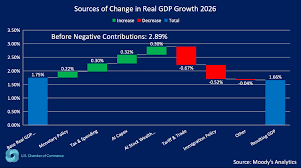
The U.S. economy is navigating a period of heightened uncertainty in early 2026 as trade policy disruptions, mixed labor data and unresolved fiscal questions complicate the outlook for growth and financial markets. Investors, businesses and policymakers alike are grappling with the evolving implications of recent policy shifts — particularly around tariffs, interest rates and employment — that now sit at the center of both domestic and global economic discourse.
Market Reverberations After Court Decision on Tariffs
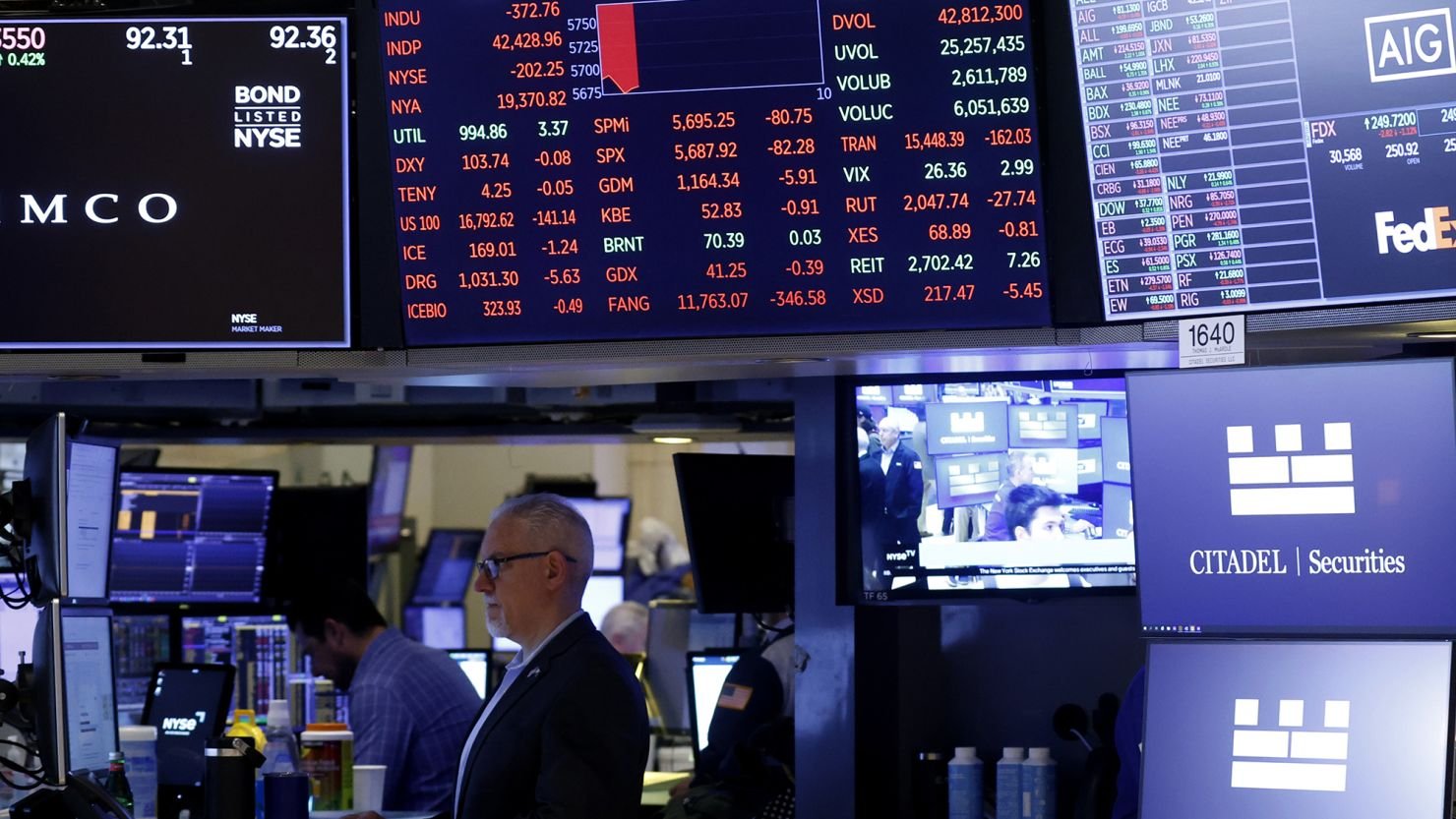
In a landmark decision, the Supreme Court of the United States struck down sweeping tariffs imposed under the earlier administration, ruling that the legal authority used to justify them was invalid. Although markets initially reacted with some relief — with major indexes inching higher shortly after the judgement — the ruling has introduced significant policy uncertainty about the future of U.S. trade strategy and its economic impact.
Rather than ending the tariff debate, the ruling has spurred a series of countermeasures from the executive branch, which quickly announced plans for replacement levies under alternative legislation. These carry their own ambiguity and have unsettled financial markets, particularly the U.S. Treasury space, where fixed‑income investors are trying to gauge the effects on long‑term debt issuance and fiscal balance. With unresolved questions around whether previously collected tariff revenue will need to be refunded, analysts warn of a possible fiscal gap running into the tens of billions of dollars that could put additional pressure on government financing and bond yields.
The resulting volatility has rippled beyond equities and Treasuries. The U.S. dollar has weakened against major currencies, reflecting investor caution amid policy unpredictability. Commodity prices, safe‑haven assets like gold, and even cryptocurrencies have shown heightened sensitivity to political developments — underlining the interconnectedness of trade policy, risk sentiment and global financial flows.
Labor Market Signals Remain Unsettled
Adding complexity to the economic narrative, employment data continues to send mixed signals. A senior official from the Federal Reserve recently acknowledged that U.S. employment may have contracted overall in 2025, despite headline job gains reported in early 2026. This suggests underlying weakness — a concerning trend for an economy still reliant on consumer spending and labour income.
Labor market strength is a critical input for policymakers as they calibrate monetary strategy. In remarks this month, another Fed governor described the likelihood of an interest rate cut in March as nearly a “coin flip,” emphasizing that any future decision hinges on whether labor market data continues to signal resilience or further deterioration.
The uncertainty around labor performance has broader implications: strong job growth can temper expectations for aggressive rate reductions, while weakness could prompt central bankers to consider easing as a buffer against slowing momentum.
Inflation and Monetary Policy Crossroads
Inflation trends have moderated from their peaks in recent years, but not uniformly. While headline inflation has edged closer to target levels, core prices — excluding volatile food and energy sectors — remain sticky. This uneven progress complicates the Bank of Canada’s (parallel context) and the Fed’s deliberations, forcing policymakers to balance the risk of premature easing with the danger of stifling growth with persistently high rates.
The mixed inflation and labor data landscape makes monetary policy less straightforward than in past cycles. Economists note that erratic fiscal measures — including abrupt tariff moves — could influence price pressures indirectly, further challenging policymakers’ ability to navigate toward stable growth without unintended side effects.
Broader Reflections: Growth, Trade and Confidence
Beyond immediate market responses, the broader economic picture suggests structural shifts are underway. Trade policy uncertainty — particularly around tariffs and international relations — is reshaping business expectations and investment plans. Firms that rely on global supply chains are recalibrating strategies as uncertainty over import costs and regulatory stability persists.
Foreign investment sentiment, especially in sectors like manufacturing and technology, has shown greater sensitivity to political and policy signals. Companies weigh longer‑term commitments against the backdrop of an unpredictable trade environment, potentially delaying capital allocation until regulatory clarity improves.
Consumer confidence — a key driver of U.S. growth — has also shown signs of vulnerability. While retail activity remains moderate, households are increasingly cautious amid mixed labor signals and cost pressures, prioritizing savings and essential spending over discretionary outlays.
Conclusion: Uncertainty as the Defining Economic Theme
As 2026 unfolds, the U.S. economy appears to be entering a complex transitional phase where policy, markets and macroeconomic fundamentals interact in unpredictable ways. Trade policy maelstroms, labor market ambiguity and monetary policy crossroads are combining to create an environment where investors and businesses must navigate uncertainty as a central theme rather than a temporary blip.
The next several months will be crucial. Employment trends, inflation data and developments in trade relations will likely guide markets and policy decisions. What remains clear is that the interplay of these forces will shape the economic trajectory — not only for the United States, but for global markets entwined with its economic fortunes.